
by Ian Loftus
The phone woke itself before the kettle did. A new alert slid down the screen:
VIRTUE INDEX UPDATE: 6.9
Reason: Unverified Emotional Claim
Context Flag: Despair Content Without Authorised Source.
Justine stared at the numbers. Yesterday she had been a 7.8. She had written one harmless post: I feel hopeless watching the news today, so I’ll log off now. No insults, no tags, no politics. Apparently, even honesty required a citation.
The fridge clicked and its display changed from green to amber: Nutrient Control Policy for At-Risk Users. The kettle stopped before boiling; holders under 7.2 did not need full heat. She poured the water and watched a skin form on her tea. Her phone rang again. Juliette’s name filled the screen.
“Darling, tell me you’re radiant.”
“I’m awake.”
“Good enough. What’s your number?”
“Six point nine.”
Juliette laughed. “That explains the gloom. Never post despair without an original source. The algorithm reads it as misinformation. Tag a journalist next time.”
“It was my feeling,” Justine said. “I’m the source.”
“That isn’t how it works. Anyway—awards dinner tonight. I’m presenting. Ethical Entrepreneurs of the Year. Come and stand next to me. Let the cameras see we still love each other. Your number will tick up before pudding.”
“I have work.”
“You have a job. There’s a difference. Wear something neutral, no slogans, and don’t mention hopelessness.”
The call ended with Juliette’s usual air-kisses. Justine stood at the window. Drones blinked over the river. On the far bank, the cranes had stopped above the half-built offices.
Her workplace was the Community Trust Hub, a building of quiet corridors and posters about belonging. She liked the hour before the working day began, when the doors were unlocked but the screens had not finished updating. She logged hardship cases, printed the morning list and made her first visit.
Mrs Jameson was eighty-nine and usually cheerful. Her heating was locked at fifteen degrees. The display said: Energy Budget Constraint: Index 4.2. Suggested habits—layer clothing, wiggle toes, retire early.
“I don’t move much,” the old woman said. “What did I do to be a four-point-whatever?”
“It’s probably your grandson. He argued with a driver last month. Scores bleed across families.”
They drank thin tea while the morning news ran a discussion captioned Freedom and Safety: Are They the Same? Mrs Jameson had sung in a choir once, before the rehearsals moved online. Justine promised to fix the heating.
Back at the Hub, Ben called her into his office. “We’ve had a memo. Celebrity Partnership. Ethical Sisters. Your sister’s crew are filming here at four.”
“No.”
“It’s not optional. The Board says proximity to a verified figure boosts our donor metrics. It’ll pay for winter fuel support.”
He pushed the memo towards her and rubbed both eyes.
At four, the cameras arrived. Juliette swept in twenty minutes late and took her place beneath the Hub’s logo.
“Look at you,” she said, loud enough for the boom mic. “Doing the real work.”
“We visit people,” Justine said. “We fix what breaks.”
“And we show what that looks like.” Juliette turned to the lens. “This is my sister. She reminds me what integrity means.”
When the sound engineer stepped away, Juliette’s smile fell. She rubbed her wrist with two fingers.
“My hands shake,” she said. “They stop when the red light’s on.”
“You could let them shake.”
“That isn’t what they buy.”
The red light came on. Juliette smiled and reached for her sister’s hand.
The next morning Justine’s image was everywhere: Ethical Sisters—A Model for Living. Her number rose to 7.3. The fridge unlocked. She ate yoghurt standing at the counter.
At the Hub, Ben slid a tablet across the desk. “You didn’t see this here.”
It was a procurement memo headed CivicScore Analytics—Community Outcomes Dashboard.
Funding Gate 1: staff Index ≥ 7.2
Funding Gate 2: monthly proximity events with verified figures (≥ 1), documented uplift ≥ 0.3
Utilities Rebate: winter heat cap relief contingent on donor engagement.
“They’ve turned kindness into a utility bill,” Justine said.
“Into a product,” Ben said. “Low-scoring postcodes cost more to heat unless they smile on camera.”
“Then we’ll stop smiling.”
“That’s a costed risk.”
That evening Juliette sent a driver. Justine went. The awards dinner was held in an old library, stripped of its shelves and fitted with mirrors. On the menu, embossed in gold, a motto read: GOODNESS DOES NOT NEED WITNESSES™.
A violinist played an algorithmic composition called Warm Rooms with the Doors Closed. The sponsor reel listed Mutual Assurance Co., Gridwise Utilities and CivicScore Analytics.
Juliette took the stage. “When we speak of ethics,” she said, “we speak of belonging. We choose the words that make our good visible. That isn’t performance—it’s clarity.”
Justine stood half a step behind her. She looked down at the green light on the fridge sponsor’s table display. Cameras flashed. The audience applauded.
The next morning, she visited the appeals centre, a clean room with chairs that adjusted themselves as people sat down. A facilitator smiled.
“We help you phrase your feelings so the system accepts them.”
“What if the system is wrong?”
“It isn’t moral,” the woman said. “It’s logistical. It recognises what citizens agree to mean by good.”
“Which citizens?”
“All of us. And the underwriters, of course. They require stability.”
Justine watched three training clips. In each one, a person repeated a sentence until the red border around it turned green. She left during the fourth.
That evening she recorded herself in natural light.
“If you have to perform goodness to be good, are you good at all?”
She posted it. For an hour nothing happened. Then the flags appeared: Moral Destabilisation. Hopelessness Without Authorised Exit. Her number fell: 6.2, 5.8, 5.0. The fridge dimmed. The lift would no longer stop above the fifth floor.
Ben messaged: Delete the video. Please. It’s killing you.
She left it up.
Juliette called. “You’ve dropped into the pit with the burners and the screamers. Let me fix it. Add a donation link and we’ll reframe it as measurable compassion.”
“You want to help your idea of me.”
There was a pause. “Fine. I’ll issue concern.”
Her number slid to 3.8. The Hub reassigned her cases. She walked until the blocks of flats gave way to allotments. A small group sat around a barrel fire.
“We thought you might come,” one of them said.
They brewed tea on a camping stove.
That night a boy gashed his hand on a broken water butt. It needed stitches.
“Triage is linked to the Index now,” someone warned. “Low scores wait.”
“He’ll keep the hand if we go,” Justine said.
She wrapped the wound and stopped a passing car. At A&E, a porter on a smoke break opened the side gate.
“I won’t say you were here,” he said.
They returned before dawn. The boy could move his fingers. Someone filled the kettle and lit the stove again.
Men in dark jackets came two days later, asking for identification. They left notices that read: Your Index is a social contract. Please return to measurable life. By dusk, three tents had gone.
Her number dropped again. Ben’s final message read: You’re more useful punished than working.
She made one last recording.
“You can take the light and the key and the number. But if you need a script to read my heart, my heart isn’t the problem.”
It was shared sixteen thousand times before her account was restricted.
Juliette appeared on television in a studio lit pale blue. “My sister is a good person confused by bad actors,” she said. A logo beneath the screen read CivicScore Analytics—Knowledge Partner. Her number climbed past nine. The host thanked her for her courage.
Within hours a petition appeared: Reinstate Justine. The Index acknowledged receipt and set a review in two weeks. Juliette posted again—On Love, Loss and Keeping Faith—and donated in her sister’s name to the Foundation that funded her sponsors. She described their childhood hiding under a table, coats drawn around them. The post reached four million likes. Her hands shook while she wrote the last paragraph. She waited for them to stop before pressing Publish.
When Justine’s fob failed at midnight, she slept in the stairwell. By morning her bank account was “parked until clarity returns”. She sold her plants, kept two books and a chipped mug. The photograph of the girls under the table went into the mug.
At the review, the panellists sat behind identical glasses of water.
“Would you like to make a statement?”
“I help people,” she said. “I won’t measure that for you. Delete me if you must.”
“Our goal is reintegration,” said the woman in the middle.
“How many chances do you allow?”
“As many as are measurable.”
“Then I pass.”
Her phone vibrated as she left the building. Your profile is now inactive. Thank you for your contribution to the common good. She dropped it into a bin and crossed the bridge. Above the river, the cranes began to move.
Juliette was filming a piece about restorative compliance when the notification arrived: Virtue Index—Perfect 10. She was feeding their father soup. He could no longer swallow properly, and she held the spoon against his lower lip until he managed it. His hand hovered above her hair. Her phone lay in her bag in the hall.
At dawn, Justine dug a narrow trench to catch the rain. The beans needed it. A man brought a carton of eggs.
“We saved the stove,” he said.
She nodded. A fox crossed the path and went under the fence.
In Juliette’s flat, the phone pulsed with new followers. She set it face down. Outside the window, two cranes moved over the roofs. She watched until one lowered its load.
At the Hub, Mrs Jameson’s radiator came on for eleven minutes. She pulled her chair closer and rested her feet against it.
On the wall outside Ben’s office, a small poem remained taped to the paint:
Be patient with the algorithm.
Engineers keep bees in their heads.
Honey is slow, and so is correction.
We live with what we feed.
Now and then, screens across the city glitched. A phrase appeared for a second: Goodness does not need witnesses. Some people opened a ticket to have it removed. Days later, someone wrote it on the glass of a bus shelter in washable pen.
Rain loosened the final word. A bus drew in and covered it from view.
Downstream, a CivicScore lanyard caught against a stone. The current pulled it free.
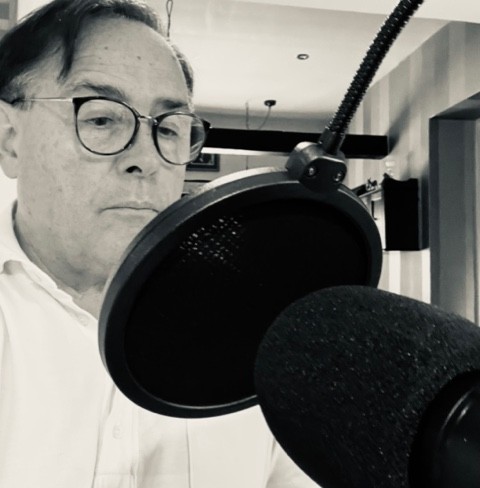
Ian P. Loftus is a writer and researcher based in Cumbria. He returned to creative writing later in life and completed a PhD in Writing at 60. His fiction and nonfiction explore memory, grief and the ways ordinary people make meaning from experience. He is the founder of Stonecurrent Press in 2026.
Featured image pexels-cottonbro-5473954

